

Hey there! As a supplier in the CNC turning game, I often get asked about cycle time. So, what exactly is the cycle time in CNC turning? Well, let's dive right in and break it down.
Understanding the Basics of Cycle Time
Cycle time in CNC turning refers to the total time it takes to complete one full cycle of a machining operation on a workpiece. This includes all the steps involved, from the moment the machine starts working on the part until it's finished and ready to move on to the next one. It's like the time it takes to bake a cake from start to finish - you've got to mix the ingredients, put it in the oven, let it bake, take it out, and let it cool. In CNC turning, it's similar but with a whole lot of high - tech machinery involved.
The cycle time consists of several components. First off, there's the cutting time. This is when the cutting tool is actually in contact with the workpiece, removing material to shape it into the desired form. The duration of the cutting time depends on a bunch of factors, like the type of material being machined, the depth of cut, the feed rate, and the cutting speed. For example, if you're working with a hard material like stainless steel, the cutting time might be longer compared to a softer material like aluminum.
Then there's the non - cutting time. This includes things like tool changes, loading and unloading the workpiece, and any idle time when the machine is moving to the next position but not actually cutting. Tool changes can be a significant part of the non - cutting time, especially if you're using multiple tools to create a complex part. You've got to stop the machine, swap out the tools, and then get it all set up again to continue cutting.
Factors Affecting Cycle Time
Let's talk about the factors that can really mess with your cycle time. One of the big ones is the part complexity. If you're making a simple cylindrical part, the cycle time is going to be much shorter than if you're creating a part with multiple diameters, threads, and intricate features. Complex parts often require more tool changes and multiple passes with different cutting parameters, which all add up to a longer cycle time.
The machine capabilities also play a huge role. A high - end CNC turning machine with advanced features like rapid tool changers and high - speed spindles can significantly reduce the cycle time. These machines can change tools quickly and move at faster speeds, allowing you to get the job done in less time. On the other hand, an older or less - advanced machine might take longer to perform the same operations.
Another factor is the programming. A well - optimized CNC program can make a world of difference. If the program is written to minimize unnecessary movements and use the most efficient cutting paths, the cycle time can be reduced. However, if the program is poorly written, the machine might make extra moves, waste time on unnecessary operations, and end up with a longer cycle time.
Importance of Reducing Cycle Time
Why is reducing cycle time such a big deal? Well, for starters, it can improve your productivity. The faster you can complete a part, the more parts you can produce in a given amount of time. This means you can take on more orders and increase your revenue.

It also helps with cost - effectiveness. When you reduce the cycle time, you're using less machine time and labor. This can lower your production costs, making your products more competitive in the market. Plus, customers are always looking for faster turnaround times, so being able to deliver parts quickly can give you an edge over your competitors.
Strategies to Reduce Cycle Time
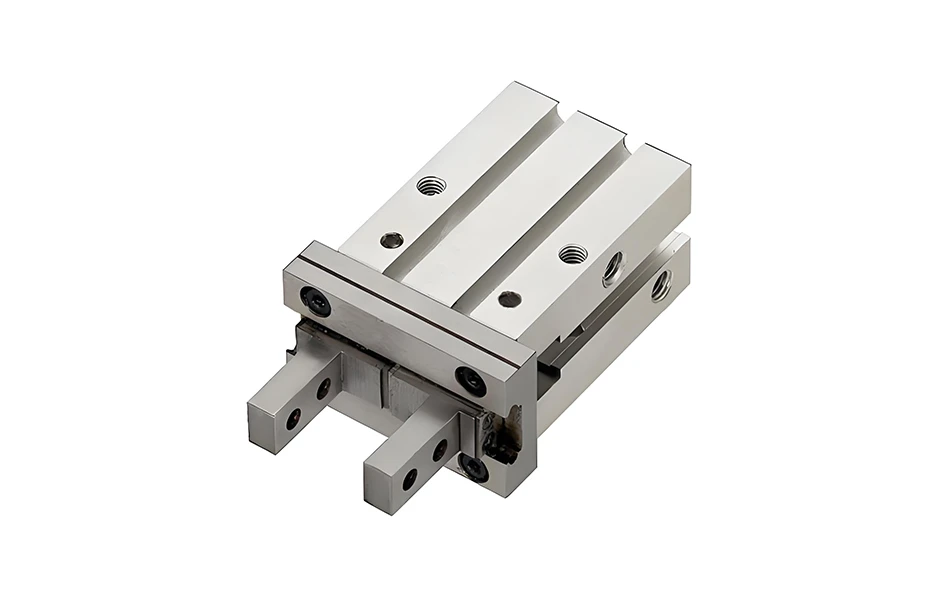
So, how can you cut down on your cycle time? One strategy is to invest in high - quality tools. Tools like the MHZ2 Parallel Type Air Gripper can help with quick and accurate workpiece handling, reducing the loading and unloading time. These grippers are designed to be reliable and efficient, allowing you to get the workpiece in and out of the machine faster.
Another option is to use advanced machine tools like the HPA63 Aluminum Electric Cylinder. These electric cylinders offer precise control and fast movement, which can speed up the machining process. They can be used for things like tool positioning and part clamping, making the whole operation more efficient.
You can also optimize your CNC programming. Work with experienced programmers who know how to write efficient programs. They can use techniques like high - speed machining strategies, which involve using higher cutting speeds and feeds to reduce the cutting time. Additionally, they can minimize non - cutting movements by planning the tool paths more effectively.
Using a CDU Free Installation Air Cylinder can also be a great way to speed up your operations. These cylinders are easy to install and can be used for various tasks in the CNC turning process, such as actuating fixtures or moving parts within the machine.
Measuring and Monitoring Cycle Time
To really get a handle on your cycle time, you need to measure and monitor it regularly. You can use software tools that come with your CNC machine to track the time taken for each operation. By analyzing this data, you can identify areas where you're losing time and come up with strategies to improve.
For example, if you notice that tool changes are taking up a lot of time, you can look into ways to reduce the tool change time. Maybe you can invest in a tool carousel that can hold more tools and change them faster, or you can train your operators to perform tool changes more efficiently.
Conclusion
In conclusion, cycle time in CNC turning is a crucial aspect of the manufacturing process. It's the total time it takes to complete one full cycle of machining a part, and it's affected by a variety of factors like part complexity, machine capabilities, and programming. By understanding these factors and taking steps to reduce cycle time, you can improve your productivity, lower your costs, and stay competitive in the market.
If you're in the market for CNC turning services or looking to optimize your existing operations, we'd love to have a chat with you. We've got the experience and the tools to help you reduce your cycle time and get the most out of your CNC turning processes. Reach out to us to start a conversation about your specific needs and how we can work together to achieve your goals.
References
- "CNC Machining Handbook"
- Industry research reports on CNC turning technology