

When it comes to automation and precision handling tasks, selecting the right size of the MHS Series 4 finger pneumatic gripper is crucial. As a trusted supplier of these high - quality grippers, I understand the significance of this decision and am here to guide you through the process.
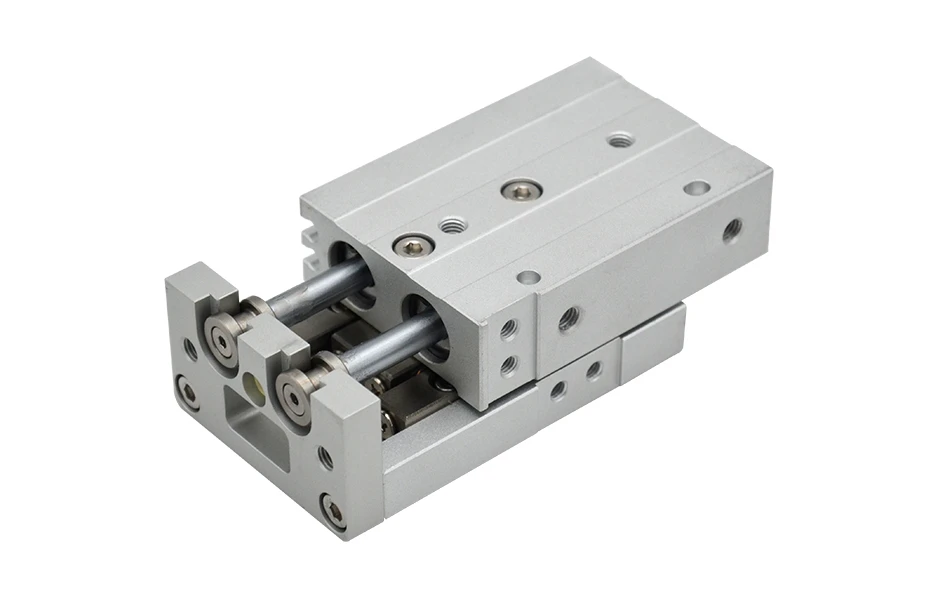

Understanding the MHS Series 4 Finger Pneumatic Gripper
The MHS Series 4 finger pneumatic gripper is renowned for its reliability, precision, and efficiency in various industrial applications. These grippers are designed to handle objects with different shapes, sizes, and weights, making them a versatile choice for many sectors, including automotive, electronics, and packaging. They operate on compressed air, providing a fast and powerful gripping force.
Key Factors in Selecting the Right Size
Payload Capacity
One of the primary considerations when choosing the right - sized MHS Series 4 finger pneumatic gripper is the payload capacity. You need to accurately determine the weight of the objects that the gripper will be handling. If the payload is too heavy for the selected gripper, it may not be able to hold the object securely, leading to potential drops and process interruptions. On the other hand, choosing an overly large gripper for a light - weight object can be wasteful in terms of cost, space, and energy consumption.
For example, in an electronics manufacturing facility where tiny components are being handled, a gripper with a lower payload capacity will be sufficient. However, in an automotive assembly line where larger and heavier parts are involved, a gripper with a higher payload capacity is required.
Object Dimensions
The size and shape of the objects to be gripped also play a significant role in size selection. The fingers of the gripper should be able to reach around the object and provide a firm grip. For irregularly shaped objects, you may need a gripper with adjustable fingers or a more flexible design.
If you are dealing with cylindrical objects, the inner diameter that the gripper can accommodate is an important parameter. Similarly, for flat objects, the surface area that the fingers can cover is crucial. Measure the maximum and minimum dimensions of the objects you plan to handle and compare them with the specifications of the different sizes of the MHS Series 4 finger pneumatic gripper.
Gripping Force
The required gripping force depends on the nature of the object and the handling process. For objects that are slippery or need to be held tightly during high - speed operations, a higher gripping force is necessary. The gripping force of the MHS Series 4 finger pneumatic gripper can be adjusted to some extent, but it is important to select a size that can provide the minimum force required for your application.
In a packaging application where products need to be gently placed into boxes, a lower gripping force may be sufficient. However, in a machining process where parts need to be held firmly during cutting operations, a much higher gripping force is essential.
Space Constraints
The physical space available in your automation system is another important factor. You need to ensure that the selected gripper can fit into the designated area without causing any interference with other components. Consider the overall dimensions of the gripper, including its length, width, and height, as well as the space required for its movement.
In a compact robotic cell, a smaller - sized gripper may be more appropriate to avoid overcrowding. In contrast, in a large - scale industrial setup with more available space, a larger gripper may be used without any issues.
Comparing with Other Pneumatic Components
It is also important to consider how the MHS Series 4 finger pneumatic gripper will integrate with other pneumatic components in your system. For example, if you are using a HLS Series Slide Table Cylinder in your automation process, you need to ensure that the gripper can be easily connected and work in harmony with it.
The same applies to other components like the MHZL2 Long Stroke Pneumatic Air Cylinder and MA Series Mini Cylinders. Compatibility in terms of air pressure, flow rate, and mounting options is crucial for the smooth operation of the entire system.
Application - Specific Considerations
High - Speed Applications
In high - speed applications, the response time of the gripper is a critical factor. A smaller gripper may have a faster response time due to its lower mass, which allows it to open and close more quickly. However, you still need to ensure that it has enough payload capacity and gripping force for the objects being handled.
For example, in a high - speed pick - and - place operation in a food packaging plant, a smaller MHS Series 4 finger pneumatic gripper may be the ideal choice to keep up with the fast - paced production line.
Precision Applications
In precision applications, such as micro - assembly in the electronics industry, the accuracy of the gripper's movement and the repeatability of the gripping force are of utmost importance. A well - sized gripper that can provide precise control over the gripping process will help to ensure the quality of the final product.
Making the Final Decision
After considering all the above factors, you should have a clear idea of the size of the MHS Series 4 finger pneumatic gripper that best suits your needs. It is also advisable to consult with our technical support team. We have extensive experience in the field and can provide you with in - depth advice based on your specific requirements.
Conclusion
Selecting the right size of the MHS Series 4 finger pneumatic gripper is a multi - faceted decision that requires careful consideration of payload capacity, object dimensions, gripping force, space constraints, and application - specific requirements. By taking the time to evaluate these factors and seeking professional advice when needed, you can ensure that you choose the most suitable gripper for your automation system.
If you are interested in purchasing the MHS Series 4 finger pneumatic gripper or have further questions about size selection, please feel free to contact us for a procurement discussion. We look forward to helping you find the perfect solution for your industrial needs.
References
- Engineering Handbook of Pneumatic Systems
- Industrial Automation Standards and Recommendations
- Case Studies in Precision Handling with Pneumatic Grippers