

Venting design in die casting is a crucial aspect that significantly impacts the quality and efficiency of the die - casting process. As a die - casting supplier, understanding and implementing proper venting design is of utmost importance to meet the high - quality requirements of our customers.
The Basics of Venting Design in Die Casting
In die casting, molten metal is injected into a die cavity at high speed and pressure. During this process, air and gases are present in the die cavity. If these gases are not properly removed, they can cause a variety of defects in the castings. Venting design is the process of creating channels or passages in the die to allow the escape of air and gases during the filling of the die cavity with molten metal.
The main purpose of venting is to prevent gas entrapment in the castings. Gas entrapment can lead to porosity, which weakens the mechanical properties of the cast part. Porous castings are more likely to fail under stress, reducing their reliability and durability. Additionally, gas entrapment can cause surface defects such as blisters and cold shuts, which affect the aesthetic appearance of the castings.
Key Elements of Venting Design
Vent Location
The location of vents is critical. Vents should be placed at the last areas to be filled by the molten metal. This is because air and gases tend to be pushed towards these areas as the metal fills the cavity. For example, in complex - shaped die - cast parts, vents should be located at the corners, thin sections, and areas with undercuts. By placing vents at these strategic locations, we can ensure that the gases are effectively removed from the die cavity.
Vent Size
The size of the vents also plays a vital role. If the vents are too small, they may not allow the gases to escape quickly enough, leading to gas entrapment. On the other hand, if the vents are too large, molten metal may flow out through the vents, causing flash on the castings. The size of the vents depends on several factors, including the type of metal being cast, the casting geometry, and the injection speed. For aluminum die casting, typical vent widths range from 0.1 to 0.3 mm, while for zinc die casting, slightly larger vent widths may be used.
Vent Shape
The shape of the vents can vary. Common vent shapes include rectangular, triangular, and circular. Rectangular vents are the most widely used because they are easy to machine and provide a large surface area for gas escape. Triangular vents can be used in areas where space is limited, as they can be made narrower at the entrance and wider at the exit to facilitate gas flow. Circular vents are less common but may be used in specific applications where a more uniform gas flow is required.
Impact of Venting Design on Casting Quality
Proper venting design can significantly improve casting quality. When the vents are designed correctly, the castings are less likely to have porosity and surface defects. This leads to castings with better mechanical properties, such as higher tensile strength and hardness. For example, in automotive die - cast parts, high - quality castings with proper venting are essential for ensuring the safety and performance of the vehicles.
In addition to improving mechanical properties, good venting design also enhances the dimensional accuracy of the castings. Gas entrapment can cause uneven filling of the die cavity, which can result in dimensional variations in the cast parts. By allowing the gases to escape smoothly, the molten metal can fill the cavity more evenly, reducing dimensional errors.

Advanced Venting Techniques
Vacuum Venting
Vacuum venting is an advanced technique that involves creating a vacuum in the die cavity before the injection of molten metal. This method can effectively remove almost all the air and gases from the cavity, resulting in castings with extremely low porosity. Vacuum venting is particularly useful for high - performance applications where the quality requirements are very strict, such as aerospace and medical device die - cast parts. However, vacuum venting systems are more complex and expensive to implement compared to traditional venting methods.
Porous Metal Inserts
Porous metal inserts can be used in the die to provide additional venting. These inserts are made of porous materials that allow gases to pass through while preventing molten metal from flowing out. Porous metal inserts can be placed at critical locations in the die, such as near the gates or in areas with high gas entrapment potential. They can improve the venting efficiency and reduce the risk of gas - related defects.
Case Studies
Let's take a look at some real - world examples of how proper venting design has improved casting quality. In a project for manufacturing MHF2 Thin Gripper Parallel, we initially faced issues with porosity and surface blisters in the die - cast parts. After analyzing the problem, we redesigned the venting system by adding more vents at the corners and thin sections of the die. This simple change significantly reduced the porosity and eliminated the surface blisters, resulting in high - quality gripper parts that met the customer's requirements.
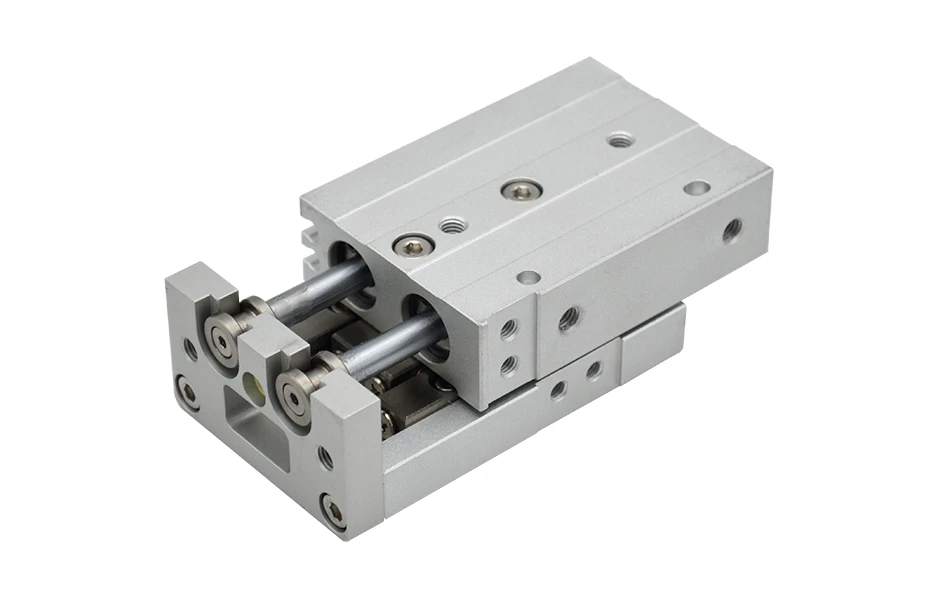
Another case is the production of CXSM series Two Rods Cylinders. The original venting design was not sufficient to remove the gases from the complex - shaped cylinder cavities. We implemented vacuum venting technology, which improved the casting quality by reducing the porosity to almost zero. The cylinders produced with the new venting design had better mechanical properties and dimensional accuracy, making them more reliable in use.
Our Expertise as a Die - Casting Supplier
As a die - casting supplier, we have extensive experience in venting design. Our team of engineers is well - versed in the principles of venting and uses advanced simulation software to optimize the venting design for each project. We can analyze the casting geometry, material properties, and process parameters to determine the most suitable venting solution.
We also invest in the latest equipment and technology to ensure the accuracy and efficiency of our venting design. For example, we use high - precision machining tools to create vents with the exact size and shape required. Our quality control system includes strict inspection of the venting performance during the die - casting process to ensure that the castings meet the highest quality standards.
Conclusion
Venting design in die casting is a complex but essential process that directly affects the quality and performance of the castings. By understanding the key elements of venting design, such as vent location, size, and shape, and implementing advanced venting techniques when necessary, we can produce high - quality die - cast parts.
As a die - casting supplier, we are committed to providing our customers with the best venting solutions. Our expertise and experience in venting design allow us to overcome various challenges and deliver castings that meet the most demanding requirements. If you are in need of high - quality die - cast parts, we invite you to contact us for procurement and further discussions. We look forward to working with you to achieve your project goals.
References
- Campbell, J. (2003). Castings. Butterworth - Heinemann.
- Flemings, M. C. (1974). Solidification Processing. McGraw - Hill.
- Dossett, J. H., & Poirier, D. R. (2003). Applied Fluid Mechanics in Materials Processing. Taylor & Francis.