

As a supplier of CU multi position free mount cylinders, I've had the privilege of witnessing firsthand the growing demand for these innovative products in various industries. These cylinders are designed to offer flexibility and precision in a wide range of applications, from automation to manufacturing. However, one question that often arises is about their pressure - relief mechanism. In this blog post, I'll delve into the details of the pressure - relief mechanism of CU multi position free mount cylinders, explaining how it works and why it's crucial for the proper functioning of the cylinders.
Understanding the Basics of CU Multi Position Free Mount Cylinders
Before we dive into the pressure - relief mechanism, let's briefly understand what CU multi position free mount cylinders are. These cylinders are a type of pneumatic or hydraulic cylinder that can be mounted in multiple positions, providing flexibility in installation. They are commonly used in applications where precise linear motion is required, such as in conveyor systems, packaging machinery, and robotic arms.
The key advantage of these cylinders is their ability to be adjusted to different positions, allowing for customized setups based on the specific requirements of the application. This flexibility makes them a popular choice for industries that need to adapt to changing production needs.
The Importance of Pressure Relief in Cylinders
Pressure relief is a critical aspect of any cylinder system. In a CU multi position free mount cylinder, the pressure inside the cylinder can build up due to various factors, such as the force applied during operation, changes in temperature, or blockages in the system. If the pressure exceeds the safe operating limit of the cylinder, it can lead to several problems, including damage to the cylinder components, leakage, and even system failure.
A proper pressure - relief mechanism ensures that the pressure inside the cylinder remains within a safe range, protecting the cylinder and the entire system from potential damage. It also helps to maintain the efficiency and reliability of the cylinder, ensuring consistent performance over time.
How the Pressure - Relief Mechanism of CU Multi Position Free Mount Cylinders Works
The pressure - relief mechanism of CU multi position free mount cylinders typically consists of a pressure - relief valve. This valve is designed to open when the pressure inside the cylinder reaches a pre - set limit. When the valve opens, it allows the excess pressure to escape, reducing the pressure inside the cylinder to a safe level.
The pressure - relief valve is usually a spring - loaded device. The spring is calibrated to a specific pressure rating, which determines the point at which the valve will open. When the pressure inside the cylinder exceeds this rating, the force exerted by the pressure overcomes the force of the spring, causing the valve to open. Once the pressure drops below the set limit, the spring closes the valve, preventing further loss of pressure.
There are different types of pressure - relief valves used in CU multi position free mount cylinders, including direct - acting and pilot - operated valves. Direct - acting valves are simple in design and are suitable for applications with relatively low flow rates. Pilot - operated valves, on the other hand, are more complex but can handle higher flow rates and are more precise in controlling the pressure.
Factors Affecting the Pressure - Relief Mechanism
Several factors can affect the performance of the pressure - relief mechanism in CU multi position free mount cylinders. One of the most important factors is the accuracy of the pressure - relief valve calibration. If the valve is not calibrated correctly, it may open too early or too late, leading to inefficient pressure relief or potential damage to the cylinder.
Another factor is the quality of the valve components. High - quality valves are made from durable materials that can withstand the high pressures and temperatures associated with cylinder operation. Inferior quality valves may wear out quickly or fail to operate properly, compromising the pressure - relief function.
The operating conditions of the cylinder also play a role. For example, if the cylinder is exposed to harsh environments, such as high humidity or corrosive substances, it can affect the performance of the pressure - relief valve. Regular maintenance and inspection of the valve are essential to ensure its proper functioning.
Applications and Benefits of CU Multi Position Free Mount Cylinders with Effective Pressure Relief
The CU multi position free mount cylinders with a reliable pressure - relief mechanism have a wide range of applications. In the manufacturing industry, they are used in assembly lines to control the movement of parts with precision. The pressure - relief mechanism ensures that the cylinders can operate safely and efficiently, even under high - pressure conditions.
In the automation industry, these cylinders are used in robotic systems to provide linear motion. The ability to mount the cylinders in multiple positions allows for more flexible and compact robotic designs. The pressure - relief mechanism protects the cylinders from damage, ensuring the long - term reliability of the robotic systems.
The benefits of using CU multi position free mount cylinders with effective pressure relief include increased safety, reduced maintenance costs, and improved system performance. By preventing over - pressure situations, the pressure - relief mechanism extends the lifespan of the cylinders and reduces the risk of system failures, which can lead to costly downtime.

Related Products and Their Compatibility
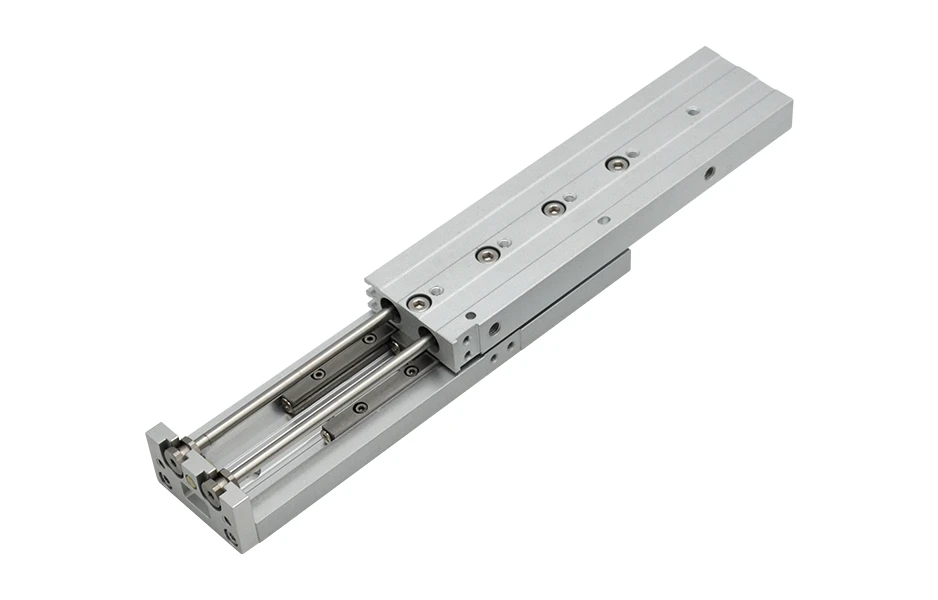
If you're considering using CU multi position free mount cylinders in your application, you may also be interested in related products that can enhance the performance of your system. For example, the MXS SeriesAir Slide Table Cylinder is a great option for applications that require smooth and precise linear motion. It can be used in conjunction with the CU multi position free mount cylinders to create a more comprehensive motion control system.
The V1 Sereries Cross Roller Linear Guide and V6 Sereries High Rigidity Crossed Roller are also compatible with the CU multi position free mount cylinders. These guides provide high - precision linear guidance, which can improve the overall accuracy and stability of the cylinder system.
Conclusion and Call to Action
In conclusion, the pressure - relief mechanism of CU multi position free mount cylinders is a crucial component that ensures the safe and efficient operation of the cylinders. Understanding how this mechanism works and the factors that affect its performance is essential for anyone using these cylinders in their applications.
If you're in the market for CU multi position free mount cylinders or related products, we are here to help. Our team of experts can provide you with detailed information about our products, including their features, specifications, and compatibility. We can also assist you in selecting the right products for your specific needs.
Don't hesitate to reach out to us for more information or to start a discussion about your procurement requirements. We look forward to working with you to find the best solutions for your business.
References
- Pneumatic and Hydraulic Cylinder Handbook, Industry Standard Publications
- Technical Manuals of CU Multi Position Free Mount Cylinders, Manufacturer's Documentation