

Hey there! As a die casting supplier, I'm super stoked to chat with you about the die casting process for die-casting with multiple cavities. It's a pretty cool topic that can make a big difference in how we produce parts efficiently.
So, first off, what's die casting? Well, it's a manufacturing process where molten metal is forced into a mold cavity under high pressure. This mold, also known as a die, is custom-made to the shape of the part we want to create. When it comes to multiple cavities, we're talking about having more than one of these part-shaped spaces in a single die.
Let's dig into the steps of this process. The first step is die design. This is like the blueprint for the whole operation. We need to figure out how many cavities we can fit into the die based on the size of the parts and the capabilities of our die casting machine. It's not just about squeezing in as many as possible; we also have to make sure that each cavity gets an equal amount of molten metal. Otherwise, some parts might come out with defects.
Once the die is designed, it's time to make it. This involves some high - tech machining. We use computer - controlled machines to cut and shape the die to the exact specifications. It's a precise process because even a tiny error can mess up the final parts. After the die is made, we give it a good quality check to make sure it meets our standards.
Now, the fun part: melting the metal. We usually use metals like aluminum, zinc, or magnesium because they have good fluidity when molten and can solidify quickly. The metal is heated in a furnace until it turns into a liquid state. The temperature has to be just right; too low, and the metal won't flow properly into the cavities, and too high, and it can damage the die.

When the metal is ready, we transfer it to the die casting machine. The machine has a shot chamber where the molten metal is loaded. Then, a plunger forces the metal into the die at high pressure. This high pressure is crucial because it helps the metal fill every nook and cranny of the cavities. It also ensures that the parts have a good surface finish and are dense.
While the metal is in the die, it starts to cool and solidify. The cooling time is carefully controlled. If it cools too fast, the parts might develop internal stresses, and if it cools too slow, the production cycle will be longer, which means less efficiency. Once the metal has solidified, the die opens, and the parts are ejected.
But it doesn't end there. After the parts are ejected, they need some finishing touches. We might need to trim off any excess metal, called flash, that was squeezed out of the cavities during the casting process. We also do some quality inspections to make sure the parts meet the required dimensions and quality standards.
One of the big advantages of die - casting with multiple cavities is the increased production rate. Instead of making one part at a time, we can make several at once. This means we can produce a large number of parts in a shorter amount of time, which is great for meeting high - volume orders. It also helps to reduce the cost per part because we're spreading the cost of the die and the machine operation over more parts.
However, there are also some challenges. As I mentioned earlier, making sure that each cavity gets an equal amount of metal can be tricky. We might need to use special gating systems to control the flow of the molten metal. These gating systems are like channels that direct the metal to each cavity.
Another challenge is maintaining the quality of all the parts. Since all the parts are made at the same time, if there's a problem with the die or the casting process, it can affect multiple parts. That's why we have strict quality control measures in place.
Now, let's talk about some of the equipment that can be useful in the die casting process. For example, pneumatic cylinders play an important role. They can be used to open and close the die, as well as to eject the parts. The DNC Series Standard Cylinder is a great option. It's reliable and can handle the high - pressure environment of die casting.
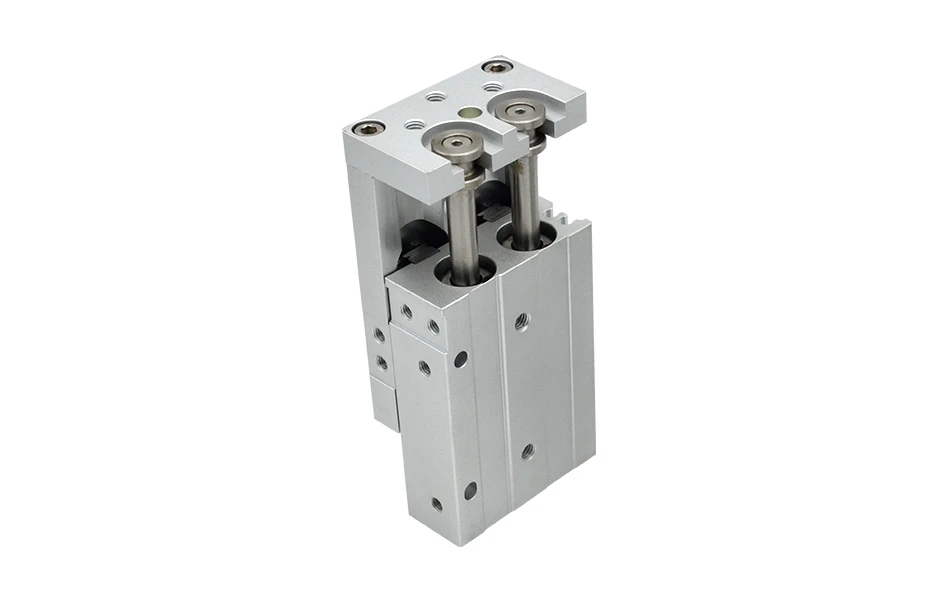
The HLQ Series Slide Table Cylinder is also handy. It can be used for precise positioning during the die casting process. And if you need to grip and hold parts during the finishing operations or quality inspections, the HFP Parallel Type Pneumatic Finger Cylinder is a good choice.
In conclusion, die casting with multiple cavities is a great way to increase production efficiency and reduce costs. But it requires careful planning, precise equipment, and strict quality control. If you're in the market for high - quality die - cast parts, we'd love to have a chat with you. Whether you need a small batch for prototyping or a large - scale production run, we've got the expertise and the equipment to get the job done right. So, don't hesitate to reach out and start a conversation about your die casting needs.
References
- "Die Casting: A Practical Guide" by John Doe
- "Advanced Die Casting Technologies" by Jane Smith