

Hey there! As a precision machining supplier, I've been in the game for quite a while, and I've seen firsthand how crucial precision is when it comes to connectors. Connectors are everywhere – from our smartphones to complex industrial machinery. They're like the unsung heroes that ensure seamless communication between different parts of a system. So, let's dive into what the precision machining requirements for connectors really are.
Material Selection
The first step in precision machining connectors is choosing the right material. Different applications call for different materials, and the choice can significantly impact the connector's performance. For example, in high - temperature environments, materials like stainless steel or titanium might be the way to go. These metals can withstand extreme heat without losing their structural integrity.
On the other hand, if you're looking for something more conductive, copper is a classic choice. Copper has excellent electrical conductivity, making it ideal for connectors used in electrical circuits. Aluminum is another option. It's lightweight and corrosion - resistant, which is great for applications where weight is a concern, like in aerospace.
When we select materials for machining connectors, we also consider the material's machinability. Some materials are easier to cut, shape, and finish than others. For instance, brass is relatively soft and can be machined with high precision, allowing us to create intricate connector designs.
Dimensional Accuracy
Dimensional accuracy is non - negotiable when it comes to connectors. A connector that's even slightly off in size can lead to poor connections, signal loss, or even system failure. We use advanced machining techniques and high - precision tools to ensure that every connector we produce meets the exact specifications.
For example, in micro - connectors used in electronic devices, the tolerances can be as tight as a few micrometers. That's incredibly precise! To achieve this level of accuracy, we rely on computer - numerical control (CNC) machines. These machines are programmed to make extremely accurate cuts and movements, allowing us to produce connectors with consistent dimensions.
We also perform regular quality checks during the machining process. Using measuring tools like calipers, micrometers, and coordinate measuring machines (CMMs), we can verify that the connectors are within the specified tolerances. If a connector doesn't meet the requirements, we'll make the necessary adjustments to get it right.
Surface Finish
The surface finish of a connector is more important than you might think. A smooth surface finish can improve the electrical conductivity of the connector and reduce the risk of corrosion. It also ensures a better fit when the connector is mated with other components.
For electrical connectors, a smooth surface reduces the contact resistance, which means less power loss and better signal transmission. We use various finishing processes, such as polishing, grinding, and plating, to achieve the desired surface finish.
Plating is a common finishing process for connectors. For example, gold plating is often used on connectors in high - end electronics because gold is highly conductive and resistant to corrosion. Nickel plating can also be used to provide a protective layer and improve the connector's durability.
Geometric Tolerances
In addition to dimensional accuracy, geometric tolerances play a crucial role in the performance of connectors. Geometric tolerances define the shape, orientation, and location of features on the connector. For example, the flatness of a connector's contact surface is important for ensuring a proper electrical connection. If the surface is not flat, there might be gaps between the connector and the mating part, leading to increased resistance.
We use advanced machining techniques to control geometric tolerances. For example, when machining a connector with multiple pins, we need to ensure that the pins are parallel and evenly spaced. This requires precise programming of the machining tools and careful monitoring of the machining process.
Assembly and Integration
Once the individual connector components are machined, they need to be assembled correctly. Assembly requires precision as well. The components need to fit together perfectly to ensure the connector functions as intended.
We have a strict assembly process in place. Our technicians are trained to handle the components carefully and use specialized tools to assemble the connectors. We also perform functional tests on the assembled connectors to make sure they work properly.
In some cases, connectors need to be integrated into larger systems. This means they need to be compatible with other components in the system. For example, a connector used in an industrial control system needs to be able to communicate with other sensors and actuators in the system. We work closely with our customers to understand their system requirements and ensure that our connectors are a perfect fit.

Applications and Related Products
Connectors are used in a wide range of applications, and different applications may have specific precision machining requirements. For example, in the automotive industry, connectors need to be able to withstand vibrations, temperature changes, and moisture. In the medical field, connectors need to be sterile and biocompatible.
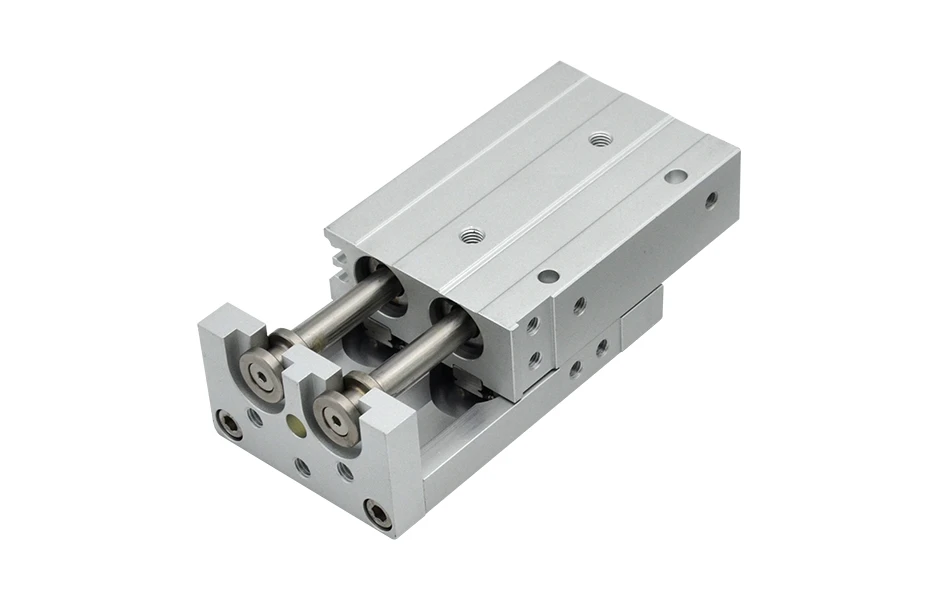
We also offer a variety of related products that can enhance the performance of connectors. For example, the MV Sereries Cross Needle Roller Guide can be used in applications where high - precision linear motion is required. The MXQ Series Compact Slide Cylinder is a great option for applications where space is limited. And the CXSM series Two Rods Cylinders can provide reliable force in industrial applications.
Conclusion
In conclusion, precision machining requirements for connectors are complex and multifaceted. From material selection to assembly and integration, every step in the process requires attention to detail and a commitment to quality. As a precision machining supplier, we're dedicated to meeting these requirements and providing our customers with high - quality connectors.
If you're in the market for precision - machined connectors or have any questions about our products and services, don't hesitate to reach out. We're here to help you find the right solutions for your specific needs. Let's start a conversation and see how we can work together to take your projects to the next level.
References
- "Precision Machining Handbook"
- "Electrical Connector Design and Application Guide"
- Industry standards and specifications related to connectors