

Hey there! As a supplier in the precision machining industry, I often get asked about the differences between precision drilling and precision boring. So, I thought I'd break it down for you in this blog post.
Let's start with precision drilling. Precision drilling is all about creating holes in a workpiece with high accuracy. It's a fundamental process in precision machining, and it's used in a wide range of applications, from aerospace to automotive to medical devices.
When we talk about precision drilling, we're usually referring to creating holes with a diameter of less than 6mm. The key to precision drilling is using the right tools and techniques. We use high-speed steel or carbide drills, which are designed to cut through materials like metal, plastic, and wood with minimal heat generation and wear.
One of the challenges of precision drilling is ensuring that the hole is straight and has the correct diameter. To achieve this, we use precision drilling machines that are equipped with advanced controls and sensors. These machines can adjust the speed, feed rate, and depth of the drill to ensure that the hole is drilled accurately.
Another important factor in precision drilling is the type of material being drilled. Different materials have different properties, and they require different drilling techniques. For example, drilling through hard materials like stainless steel or titanium requires a slower speed and a higher feed rate than drilling through softer materials like aluminum or brass.
Now, let's move on to precision boring. Precision boring is a process of enlarging an existing hole to a specific diameter with high accuracy. It's often used after precision drilling to achieve a more precise hole size and surface finish.

Precision boring is typically used for holes with a diameter of more than 6mm. The process involves using a boring tool, which is a cutting tool that is designed to remove material from the inside of a hole. The boring tool is mounted on a boring bar, which is a long, slender tool that is used to support the boring tool and guide it into the hole.
One of the advantages of precision boring is that it can achieve a higher level of accuracy than precision drilling. This is because the boring tool can be adjusted to remove a very small amount of material at a time, which allows for a more precise control of the hole size and surface finish.
Another advantage of precision boring is that it can be used to correct any errors or imperfections in the hole that were created during the precision drilling process. For example, if the hole is slightly off-center or has a rough surface finish, precision boring can be used to correct these issues and achieve a more precise hole.
So, what are the main differences between precision drilling and precision boring? Here are some of the key differences:
- Hole size: Precision drilling is typically used for holes with a diameter of less than 6mm, while precision boring is used for holes with a diameter of more than 6mm.
- Process: Precision drilling involves creating a hole in a workpiece, while precision boring involves enlarging an existing hole to a specific diameter.
- Tools: Precision drilling uses drills, while precision boring uses boring tools.
- Accuracy: Precision boring can achieve a higher level of accuracy than precision drilling, especially for larger holes.
- Surface finish: Precision boring can achieve a better surface finish than precision drilling, which is important for applications that require a smooth and precise surface.
In conclusion, precision drilling and precision boring are two important processes in precision machining. They are used to create holes in workpieces with high accuracy and are essential for a wide range of applications. While they have some similarities, they also have some key differences, and it's important to choose the right process for the job.
If you're in the market for precision machining services, we'd love to hear from you. We're a leading supplier of precision machining services, and we have the expertise and experience to handle even the most complex projects. We use the latest technology and equipment to ensure that our products meet the highest standards of quality and accuracy.
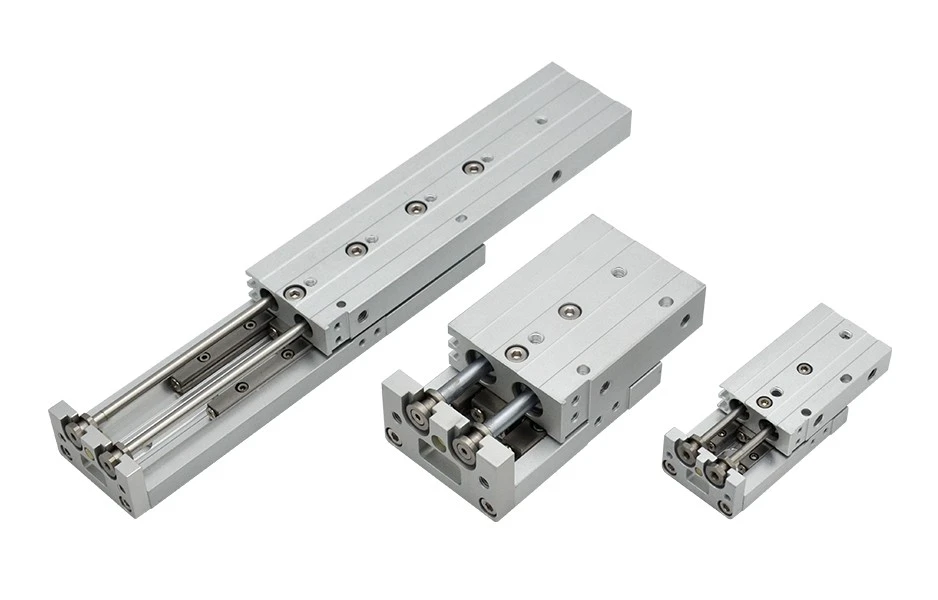
We also offer a wide range of products and services, including MXS SeriesAir Slide Table Cylinder, V1 Sereries Cross Roller Linear Guide, and V3 Sereries High Rigidity Crossed Roller. These products are designed to meet the needs of a wide range of industries, and they are known for their high quality and reliability.
So, if you're looking for a precision machining supplier that can provide you with high-quality products and services, please don't hesitate to contact us. We'd be happy to discuss your project with you and provide you with a free quote.
References:
- "Precision Drilling and Boring: A Guide to Achieving High Accuracy" by John Doe
- "Advanced Machining Processes" by Jane Smith
- "Precision Machining Handbook" by Bob Johnson