

Hey there! As a supplier of precision cross roller guides, I've seen firsthand how crucial it is to ensure these guides are performing at their best. In this blog, I'll share some practical tips on how to check the performance of a precision cross roller guide.
Why Performance Checks Matter
Before we dive into the how - to, let's talk about why checking the performance of these guides is so important. Precision cross roller guides are used in a wide range of applications, from CNC machines to semiconductor manufacturing equipment. Any drop in performance can lead to inaccurate positioning, increased wear and tear on other components, and ultimately, a decrease in the overall efficiency of the machine. So, regular performance checks can save you a lot of headaches and money in the long run.
Visual Inspection
The first step in checking the performance of a precision cross roller guide is a simple visual inspection. Start by looking at the guide for any signs of physical damage. This could include scratches, dents, or chips on the surface of the guide rails or the rollers. Even a small scratch can cause the rollers to move unevenly, leading to poor performance.
Check the mounting surfaces as well. Make sure the guide is properly bolted or clamped in place. Loose mounting can cause the guide to shift during operation, which can affect its accuracy. Also, look for any signs of corrosion. Corrosion can weaken the guide and make it less reliable.

Smoothness of Movement
One of the key indicators of a well - performing precision cross roller guide is how smoothly it moves. You can test this by manually moving the carriage along the guide rails. The movement should be smooth and free of any jerks or sticking points. If you feel any resistance or hear unusual noises, it could be a sign of a problem.
To get a more accurate assessment, you can use a dial indicator. Mount the dial indicator on a stable surface and position the probe against the carriage. Then, slowly move the carriage along the guide. The dial indicator will show any variations in the movement. You're looking for consistent readings. Any significant fluctuations could mean that the rollers are not moving evenly or that there is some debris in the guide.
Accuracy of Positioning
Precision cross roller guides are designed to provide accurate positioning. To check the accuracy, you can use a coordinate measuring machine (CMM) or a laser interferometer. These tools can measure the position of the carriage with high precision.
Set up the measuring device according to the manufacturer's instructions. Then, move the carriage to a series of pre - determined positions and record the actual positions measured by the device. Compare these measurements with the expected positions. The difference between the actual and expected positions is the positioning error. A well - performing guide should have a very small positioning error.
Load Capacity
Another important aspect of performance is the load capacity of the guide. You need to make sure that the guide can handle the loads it will be subjected to in its application. To check this, you can refer to the manufacturer's specifications for the guide. The specifications will tell you the maximum static and dynamic loads the guide can support.
If possible, you can also perform a load test. Apply a known load to the carriage and observe how the guide responds. The guide should continue to operate smoothly and accurately under the load. If you notice any signs of deformation or excessive wear during the load test, the guide may not be suitable for the application.
Temperature and Lubrication
Temperature can have a significant impact on the performance of a precision cross roller guide. High temperatures can cause the materials to expand, which can affect the accuracy of the guide. Check the operating temperature of the guide during normal operation. If the temperature is too high, it could be a sign of excessive friction or a problem with the lubrication.
Speaking of lubrication, it's essential for the proper functioning of the guide. Check the lubrication level regularly. If the guide is under - lubricated, the rollers will experience more friction, which can lead to wear and poor performance. On the other hand, over - lubrication can cause the accumulation of dirt and debris, which can also affect the guide's performance.
Related Products
If you're in the market for other motion control products, we also offer some great options. For example, the HPA63 Aluminum Electric Cylinder is a high - performance electric cylinder that can be used in a variety of applications. It offers precise control and high thrust force.
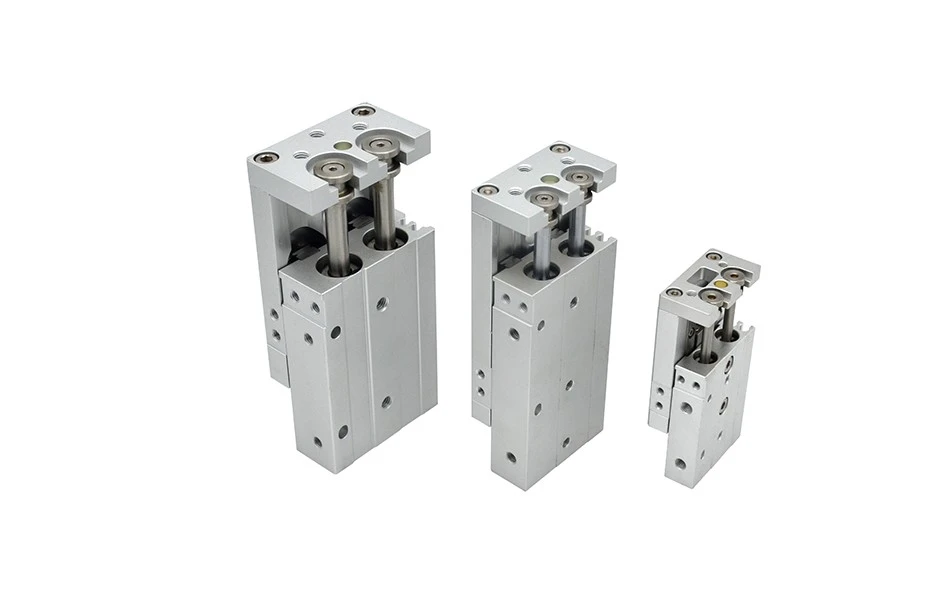
The HLQ Series Slide Table Cylinder is another excellent product. It provides smooth and reliable linear motion, making it suitable for automation systems.
And if you need a linear guideway, the 9MM Linear Guideway with Slider is a great choice. It offers high precision and low friction, ensuring accurate and efficient movement.
Conclusion
Checking the performance of a precision cross roller guide is a multi - step process that involves visual inspection, testing the smoothness of movement, accuracy of positioning, load capacity, and considering temperature and lubrication. By following these steps regularly, you can ensure that your guide is performing at its best and avoid costly breakdowns.
If you're interested in purchasing precision cross roller guides or any of our other products, we'd love to have a chat with you. Contact us to start a discussion about your specific needs and how we can help you find the right solutions.
References
- Manufacturer's manuals for precision cross roller guides
- Industry standards for motion control components
- Technical papers on precision engineering and guide performance