

Hey there! I'm a supplier of SMC type rotary table air cylinders. Today, I wanna share with you how to adjust the air flow rate for these awesome cylinders.
First off, why is adjusting the air flow rate so important? Well, it directly affects the performance of the SMC type rotary table air cylinder. If the air flow rate is too high, the cylinder might move too fast, causing unnecessary wear and tear, or even leading to inaccurate positioning. On the other hand, if the flow rate is too low, the cylinder may move too slowly, which could slow down your entire production process.
Understanding the Basics of Air Flow in SMC Type Rotary Table Air Cylinders
Before we dive into the adjustment process, let's quickly go over how air flows in these cylinders. The air enters the cylinder through a port, and this air pressure is what drives the piston inside the cylinder to move. The movement of the piston is then transferred to the rotary table, making it rotate. The rate at which the air enters and exits the cylinder is what we're talking about adjusting here.
Tools You'll Need
To adjust the air flow rate, you'll need a few basic tools. A good-quality air pressure gauge is essential. This will help you measure the air pressure and make sure it's within the right range. You'll also need a screwdriver, usually a small one, to adjust the flow control valves.
Step-by-Step Guide to Adjusting Air Flow Rate
Step 1: Locate the Flow Control Valves
The flow control valves are usually located near the air input and output ports of the cylinder. These valves are used to regulate the amount of air that enters and exits the cylinder.
Step 2: Set Your Initial Pressure
Before you start making any adjustments, it's a good idea to set an initial air pressure. You can do this by using your air pressure gauge. Connect the gauge to the air supply line and check the pressure. Most SMC type rotary table air cylinders work best within a certain pressure range, which you can find in the product manual.
Step 3: Make Small Adjustments
Once you've set the initial pressure, it's time to start adjusting the flow control valves. Use your screwdriver to turn the valve. Turning the valve clockwise will usually decrease the air flow rate, while turning it counterclockwise will increase it. Make small adjustments at a time, and then check the performance of the cylinder.
Step 4: Test the Cylinder
After each adjustment, test the cylinder to see how it's performing. You can do this by running a few cycles of the rotary table. Pay attention to the speed and smoothness of the movement. If the table is moving too fast or too slow, make another small adjustment.
Step 5: Fine-Tune the Settings
Keep making small adjustments and testing the cylinder until you get the desired performance. It might take a few tries, but once you find the right air flow rate, the cylinder will work like a charm.
Common Issues and Solutions
Sometimes, you might run into some issues while adjusting the air flow rate. Here are a few common problems and how to fix them:
Problem: The Cylinder Moves Erratically
If the cylinder is moving erratically, it could be due to an uneven air flow. Check the flow control valves to make sure they're adjusted properly. You might also want to check for any air leaks in the system.
Problem: The Cylinder is Too Slow
If the cylinder is moving too slowly, try increasing the air flow rate by turning the flow control valve counterclockwise. Make sure the air pressure is also within the recommended range.
Problem: The Cylinder is Too Fast
If the cylinder is moving too fast, decrease the air flow rate by turning the flow control valve clockwise. You may also need to check the load on the cylinder to make sure it's not too light.
Other Related Products
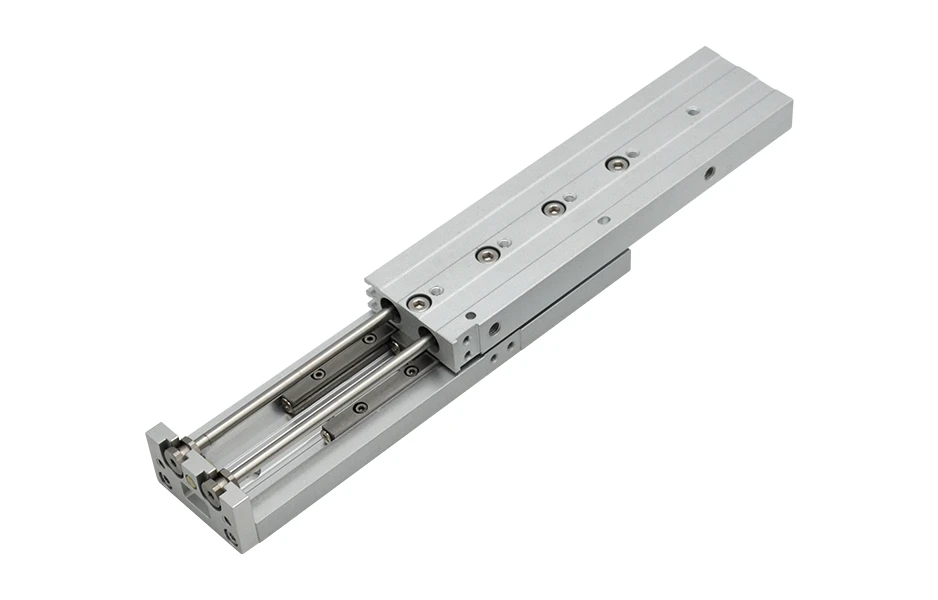
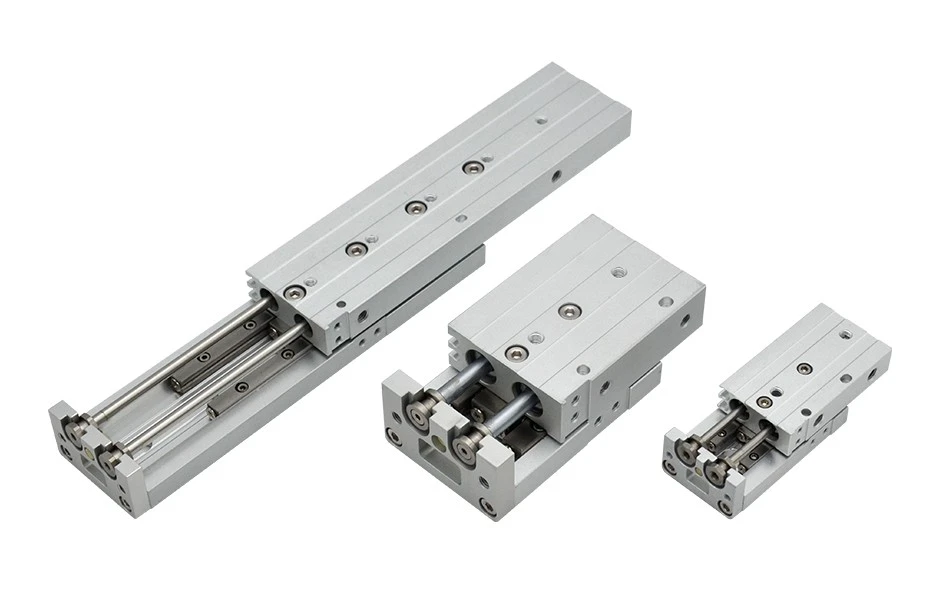
Here at our place, we also offer a variety of other pneumatic cylinders. For instance, we have the MXS SeriesAir Slide Table Cylinder, which is great for applications where precise linear motion is required. The HLF Series Slide Cylinder is another popular choice. It's designed to provide smooth and stable operation, even under heavy loads. And if you're looking for a rodless cylinder, our DGC-K Series Rodless Cylinder is definitely worth considering.
Conclusion and Invitation
Adjusting the air flow rate for SMC type rotary table air cylinders might seem a bit tricky at first, but once you get the hang of it, it's not that hard. By following the steps I've outlined above, you'll be able to optimize the performance of your cylinders and keep your production running smoothly.
If you're in the market for SMC type rotary table air cylinders or any of our other pneumatic products, don't hesitate to reach out. We're here to help you find the right products for your needs and answer any questions you might have. Whether you're a small business or a large industrial company, we've got the solutions for you. Let's start a conversation and see how we can work together!
References
- SMC Pneumatic Cylinder Product Manuals
- General Knowledge of Pneumatic Systems and Cylinders