

Slide table cylinders are essential components in many industrial applications, offering precise linear motion and reliable performance. As a supplier of slide table cylinders, I often get asked about how these nifty devices work. So, let's dive right in and break down the mechanics behind slide table cylinders.
The Basics of Slide Table Cylinders
At their core, slide table cylinders are a type of pneumatic or hydraulic actuator. They combine the functions of a linear cylinder and a slide table, allowing for smooth and accurate movement in a straight line. These cylinders are commonly used in automation systems, manufacturing processes, and material handling applications where precise positioning is crucial.
How They're Put Together
A slide table cylinder typically consists of several key parts:
- Cylinder Barrel: This is the main body of the cylinder where the piston moves back and forth. It's usually made of high-strength materials like aluminum or stainless steel to withstand the forces involved.
- Piston: The piston is a cylindrical component that fits inside the cylinder barrel. It divides the barrel into two chambers and is connected to the slide table. When pressurized air or hydraulic fluid is applied to one side of the piston, it moves the piston and the attached slide table in the desired direction.
- Rod: The rod is connected to the piston and extends outside the cylinder barrel. It provides a means of attaching the slide table to the piston and transfers the linear motion from the piston to the table.
- Slide Table: The slide table is the platform that moves along the linear path. It's designed to support loads and provide a stable surface for mounting other components. The slide table is guided by linear bearings or ways to ensure smooth and accurate movement.
- End Caps: The end caps are located at the ends of the cylinder barrel and seal the chambers. They also contain ports for the inlet and outlet of pressurized air or hydraulic fluid.
The Working Principle
The operation of a slide table cylinder is based on the principles of fluid power. Let's take a look at how it works in a pneumatic system:
- Initial State: When the system is at rest, both chambers of the cylinder are at atmospheric pressure, and the slide table is in its neutral position.
- Extending the Slide Table: To extend the slide table, pressurized air is supplied to the chamber on one side of the piston. The force of the compressed air pushes the piston and the attached slide table in the direction of the rod. As the piston moves, the air in the other chamber is vented to the atmosphere through a port in the end cap.
- Retracting the Slide Table: To retract the slide table, the flow of pressurized air is reversed. The compressed air is now supplied to the chamber on the other side of the piston, pushing the piston and the slide table back to its original position. Again, the air in the now-pressurized chamber is vented to the atmosphere.
- Controlling the Movement: The speed and force of the slide table's movement can be controlled by adjusting the pressure and flow rate of the compressed air. This allows for precise positioning and movement control in various applications.
In a hydraulic system, the working principle is similar, but instead of compressed air, hydraulic fluid is used to generate the force. Hydraulic systems are typically used in applications where higher forces and greater precision are required.
Advantages of Slide Table Cylinders
Slide table cylinders offer several advantages over other types of linear actuators:
- Precision: They provide accurate linear motion with high repeatability, making them ideal for applications that require precise positioning.
- High Load Capacity: Slide table cylinders can support relatively high loads, thanks to their robust design and the use of linear bearings or ways.
- Compact Design: They have a compact footprint, which makes them suitable for applications where space is limited.
- Easy Installation: Slide table cylinders are easy to install and integrate into existing systems, reducing downtime and installation costs.
- Low Maintenance: With few moving parts and simple construction, slide table cylinders require minimal maintenance, resulting in lower operating costs.
Our Product Range
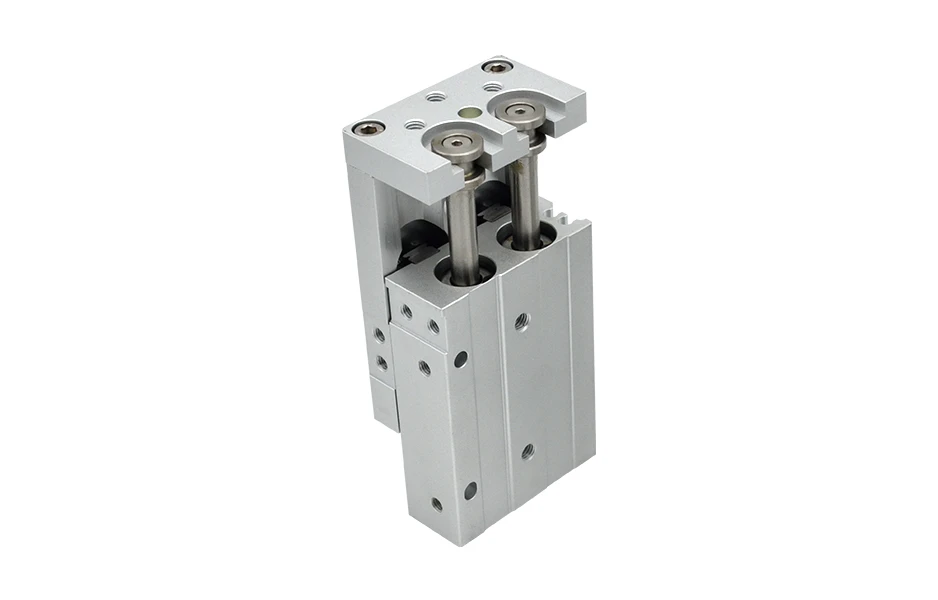
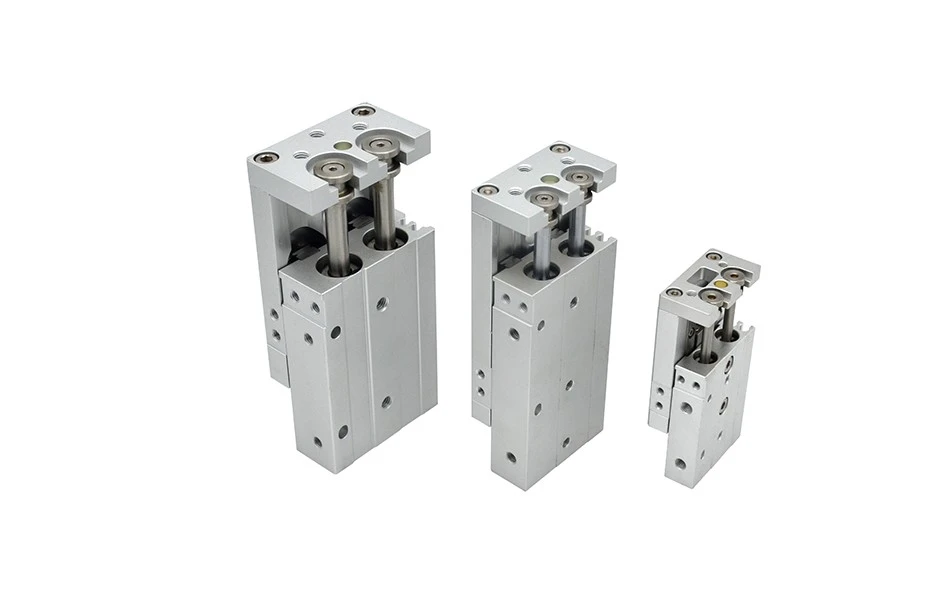
As a supplier of slide table cylinders, we offer a wide range of products to meet the diverse needs of our customers. Our product lineup includes the HLH Series Slide Table Cylinder, the HLS Series Slide Table Cylinder, and the HLQ Series Slide Table Cylinder. These series are designed to provide high performance, reliability, and durability in a variety of industrial applications.
Applications
Slide table cylinders are used in a wide range of industries and applications, including:
- Automation: They are commonly used in automated manufacturing processes for tasks such as pick-and-place operations, assembly, and testing.
- Material Handling: Slide table cylinders are used in conveyor systems, robotic arms, and other material handling equipment to move and position loads.
- Packaging: They are used in packaging machines for tasks such as filling, sealing, and labeling.
- Medical Equipment: Slide table cylinders are used in medical devices for precise positioning and movement control.
- Semiconductor Manufacturing: They are used in semiconductor manufacturing equipment for tasks such as wafer handling and testing.
Conclusion
Slide table cylinders are versatile and reliable components that play a crucial role in many industrial applications. By understanding how they work and the advantages they offer, you can make informed decisions when selecting the right slide table cylinder for your needs. If you're interested in learning more about our slide table cylinders or have any questions, feel free to reach out to us. We're here to help you find the perfect solution for your application. Contact us today to start the procurement process and take your industrial operations to the next level.
References
- Fluid Power Handbook, edited by the Fluid Power Society
- Pneumatic Systems Design and Application, by Neil Sclater